In today’s interconnected world, the concept of the “consumer” has become increasingly global, yet the experience of being a consumer can vary dramatically depending on where one lives. Consumer rights, protections, and expectations differ significantly across countries because they are shaped by cultural norms, legal frameworks, economic systems, and technological infrastructure. However, despite these differences, there is a shared core expectation: people want to be treated in a friendly and respectful way.
Friendliness has a universal foundation. In a globalized world, it cannot be relativized or dismissed as merely cultural. People everywhere understand what basic friendliness means. From a consumer’s perspective, there is ultimately only one consumer landscape – one that is either friendly or unfriendly – and this directly reflects a society’s values and traditions.
United Arab Emirates (UAE)
The United Arab Emirates (UAE) is a country where luxury and consumer spending are closely linked to rapid economic development. Generally, people who can afford luxury expect to be treated as luxury customers, which implies a consistently high standard of service quality. Dubai, in particular, is a luxury-oriented city in almost every field: public transportation, iconic skyscrapers, world-class shopping malls, advanced digital infrastructure, excellent schools and universities, high levels of public security, modern hospitals, and many other aspects that define the emirate.
The ruler of Dubai, Sheikh Mohammed bin Rashid Al Maktoum, following the philosophy of his predecessors, has consistently emphasized that development must go beyond physical infrastructure and focus on people. He has repeatedly underscored that effective leadership means being on the ground with the people – understanding their needs, sharing their realities, and improving their lives – because “serving people and easing their lives” is central to the success of public service systems. As a result, Dubai – and the UAE as a whole – has become a place where people from all walks of life, whether workers or high-level executives, are often treated with a high degree of respect and hospitality.
“I say a leader must be on the ground living among the people, enduring their conditions, experiencing their lives and knowing the minute details of their suffering in order to chance their situation for the better.”
Al Maktoum, Sheikh Mohammed bin Rashid. My Story, page 99. First edition 2019. The Executive Office.
Both the tangible and intangible values of Dubai are carefully maintained through the proper behavior, rights, and duties of its residents. In return, residents – also in their role as consumers – benefit from high-quality services and strong protection from the state. Every consumer represents a fundamental building block of the city’s wealth, contributing directly to its economic prosperity and global reputation, which is why Dubai considers each individual worthy of corresponding protection and respect.
The diverse expat population, which makes up a significant portion of the UAE’s residents, adds to this inclusive atmosphere. From the labor force to business owners, the UAE promotes a sense of equality in terms of service and treatment, focusing on ensuring that all individuals, regardless of background or income level, are valued as part of the social fabric. This blend of luxury and equality helps shape a distinctive consumer experience, where accessibility and respect are just as important as wealth and exclusivity.
While this culture aims to ensure fair treatment for everyone, it does not completely eliminate the possibility of being treated inappropriately – though such instances are rare. However, when such issues do arise, and if a consumer makes the effort to bring the matter to the attention of the Consumer Protection Department, the system is designed to respond swiftly and effectively to protect the consumer’s rights. The department’s role is to ensure that all consumers, regardless of their social standing, can rely on fair treatment and resolution of their grievances.
Consumer Protection & Legal Framework
Consumer protection in the UAE is taken very seriously. The country has implemented strict regulations to safeguard consumers, particularly regarding product quality, pricing transparency, and dispute resolution. The UAE’s Consumer Protection Law ensures that consumers are not misled by false advertising or low-quality products.
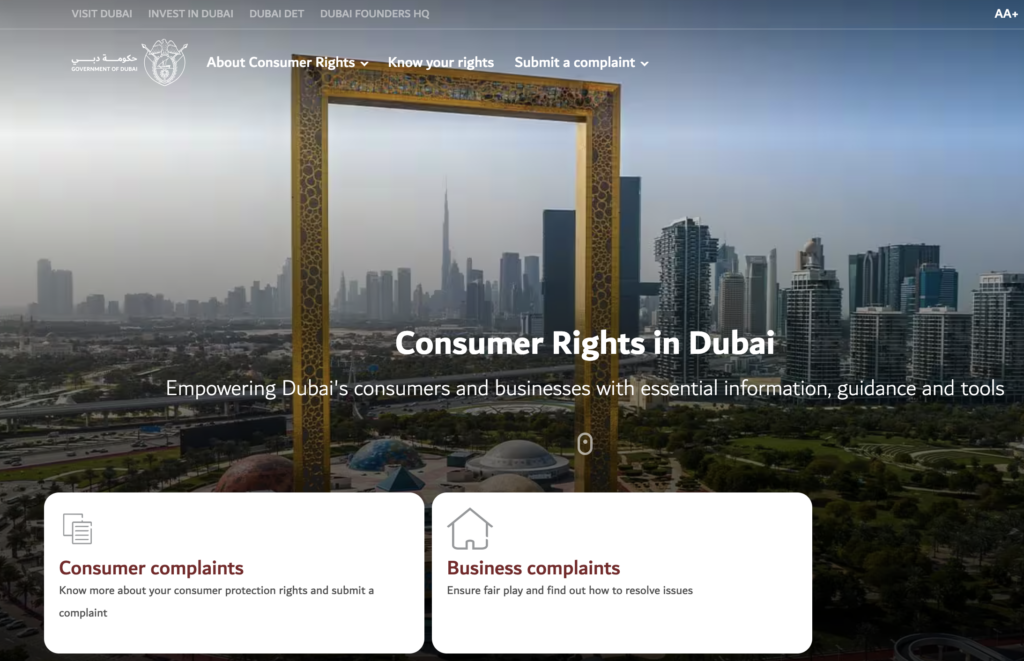
The Dubai Economy Department and other government agencies provide a clear framework for consumers to report grievances. The UAE also enforces transparent return and refund policies for most goods and services. By exercising their consumer rights, individuals not only protect themselves but also contribute to maintaining high service and product standards, supporting Dubai and the UAE in achieving their vision of quality and excellence.
Leadership and Consumer Service
Leadership and consumer service are tightly linked, with effective leadership directly shaping customer satisfaction and consumer protection mechanisms, ensuring efficient and accessible solutions.
Consumer rights in the UAE are well protected. Even when cultural factors play a crucial role in shaping the overall consumer experience, this is not a problem in Dubai. With a large expatriate population from all over the world, the market is highly diverse and caters to people with a wide range of behavioral norms. In contrast, in Germany, such diversity can pose significant challenges, as the leadership of customer service staff does not always guide employees toward consistently delivering high-quality service. In Dubai, however, the entire workforce generally operates within a framework of high-quality service delivery, reflecting leadership standards that are applied consistently in day-to-day practice.
Even so, there are situations in Dubai where customers must decide whether to tolerate inappropriate behavior from service staff. While the quality of tangible goods can be easily controlled and monitored, the quality of services is more difficult to standardize and often depends heavily on direct consumer feedback and personal experience. This feedback is crucial for companies or government authorities to be informed of issues that could otherwise weaken the culture of high-quality service.
In Dubai as well as in other Emirates, while customers are expected to observe laws and principles of appropriate consumer behavior, they are also encouraged to resist and report inadequate treatment by company staff. In Dubai, Sheikh Mohammed bin Rashid Al Maktoum, Vice President and Prime Minister of the UAE and Ruler of Dubai, places strong emphasis on service excellence and quality of life for people as core priorities of governance, and in his leadership philosophy he underscores collective participation and responsibility, which can include the role of individuals (including consumers) in the broader system of service quality. Sheikh Mohammed has repeatedly stated that the purpose of government services is to serve people and make their lives easier, focusing on zero bureaucracy and rapid, efficient delivery of services. This reflects a broader expectation that services should be designed around citizens and residents, not the other way around.
“The only real measure of success in government is customer satisfaction.”
Jarrar, Dr Yasar. The Sheikh CEO – Lessons in Leadership from Mohamed bin Rashid Al Maktoum, page 135. First Edition, 2020. Explorer Publishing & Distribution, Dubai.
Shared Responsibility: Upholding Dubai’s Standard of Excellence
Residents and visitors of Dubai should actively engage with and reflect on the leadership philosophy of Sheikh Mohammed, recognizing their shared responsibility in upholding his vision. This is essential to preserving Dubai as a city where citizen-consumer rights are not only respected and protected but actively enforced and celebrated. Dubai’s global reputation for fairness, trust, and excellence depends on this collective commitment.
By truly valuing customers, trusting in the leadership of Sheikh Mohammed, and assisting him and his team in this challenging responsibility, Dubai can remain a unique city where high-quality service is the standard for every consumer. It would be detrimental for everyone if Dubai were to become a purely capitalist city, where individuals are left to bear the consequences of substandard service. This principle applies not only to Dubai but to the entire UAE.
Every individual’s behavior directly shapes the relationship between consumers and Dubai’s social, commercial, and governmental institutions. Poor service should never be passively accepted. Consumers who voice concerns, demand accountability, and make informed choices play a decisive role in maintaining high standards. Such constructive resistance strengthens the consumer market on which Dubai relies to create value, sustain quality, and ensure that prosperity benefits everyone.
Conclusion
In Dubai, being a consumer goes beyond simply purchasing goods or services – it is about participating in a system where high standards, respect, and accountability are expected and upheld. Residents and visitors alike share the responsibility to value quality, provide feedback, and support the leadership vision that prioritizes people alongside development. By engaging actively in this system, every consumer helps strengthen the city’s reputation for excellence, fairness, and trust. Dubai’s model demonstrates that when leadership, businesses, and consumers work together, a city can achieve not only economic prosperity but also a culture where rights are protected, service is exceptional, and every individual feels valued. In this way, to be a consumer in Dubai is to be part of a community that shapes the city’s success and sets a global standard for what a modern, consumer-focused society can achieve.
Submit a Consumer Complaint: Dubai Consumer Protection Complaint Form