At the U.S.-Saudi Investment Forum on November 19, 2025, held at the Kennedy Center in Washington D.C., Elon Musk, the CEO of Tesla (TSLA) and owner of several other companies, shared his vision for the future. He predicted that within the next 10 to 20 years, work would become “optional,” comparing it to the choice of maintaining a vegetable garden.
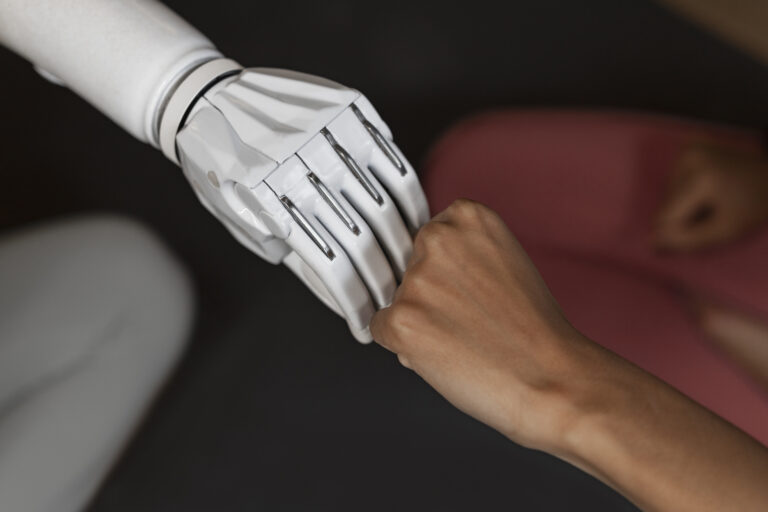
According to Musk, robots like Optimus will make work optional, saying: “My prediction is that work will be optional. It’ll be like playing sports or a video game.” He continued, “If you want to work, it’s the same as choosing whether to buy vegetables from the store or grow them in your backyard. Growing vegetables is harder, but some people enjoy it because they like gardening.” Musk, a creator at heart, sees this as a natural progression.
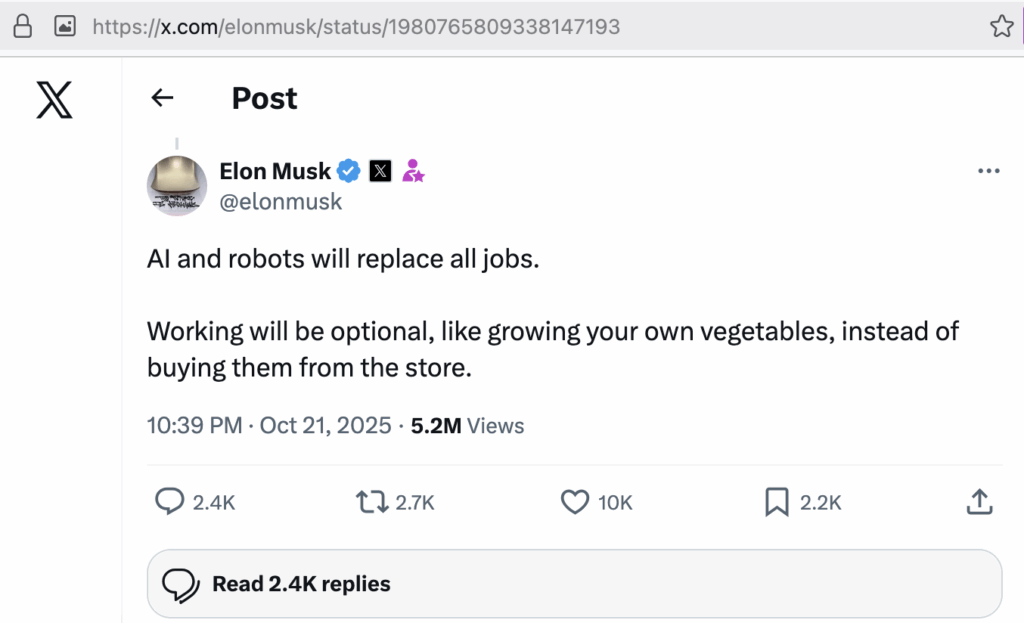
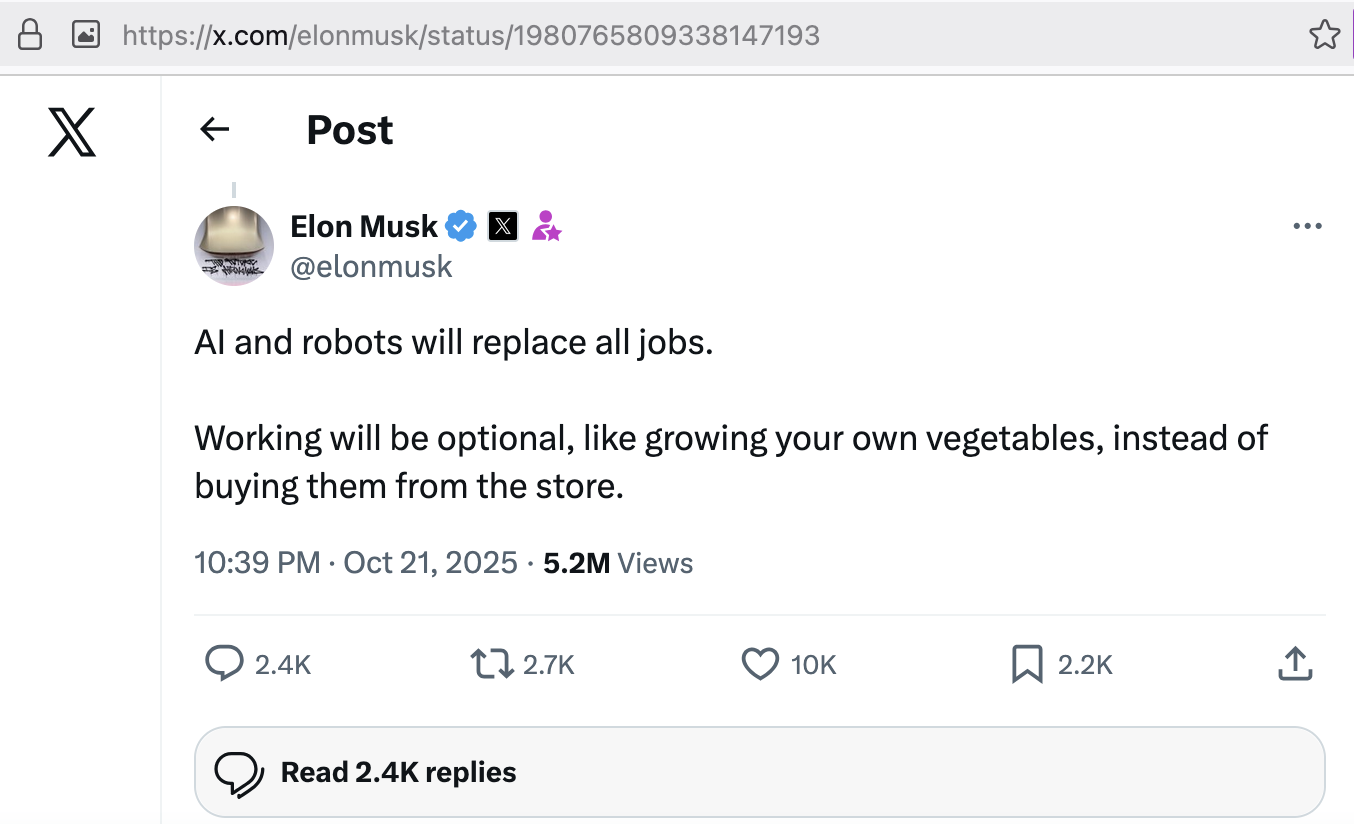
But what will humans do in Musk’s robotic future? Certainly not work, he suggested in a tweet on October 21, 2025: “In the future, work will be optional.”
Musk has also touched on a critical issue: poverty. He’s one of the few entrepreneurs who genuinely appears to care about eliminating poverty. Over the years, he’s expressed concern about its persistence and often reflects on solutions. Already at Viva Technology 2024, Musk proposed the idea of “universal high income” as a potential solution in a world where work is no longer necessary. However, he didn’t provide specifics on how such a system would operate.
While Musk is focused on advancing technology, poverty elimination would require a full-time commitment, and tackling this issue systematically is no small task. Poverty is a human-made problem, and despite the efforts of governments, companies, and non-profits (including many NGOs), it continues to grow. In Germany, for example, one of the countries with the most NGOs dedicated to poverty eradication, poverty levels are still on the rise.
Musk’s vision of using AI and human robotics to eliminate poverty reminds me of another influential entrepreneur, Sam Altman, CEO of OpenAI, who has advocated for universal basic income (UBI). UBI would provide regular, unconditional payments to individuals, often proposed as a government initiative. However, the idea faces opposition in countries like Brazil, where political parties rely on poverty to fuel their success.
Musk’s perspective – that AI and robotics could end poverty – could be humanity’s last, best hope to disrupt the cycle of corruption and weaken the power of elites who profit from inequality. If money becomes less relevant, the influence of corrupt political figures will diminish, paving the way for a more equitable society. This offers a compelling vision for the future.
Robots like Optimus will make working “optional” in the future